Nobody’s Job: Why Influencer Campaign Reviews Are Broken
By Justin Maples
There is a moment that happens on every influencer campaign. The brief has gone out. The agency confirmed. The deadline is set. And then the videos come back.
That moment should feel like a finish line. You briefed the creators, the content is ready, the campaign is close to going live. But for most brand managers I’ve talked to, it feels like the opposite. Instead it feels like the start of a problem nobody owns.
The Start of a Problem Nobody Owns
Here’s what has just begun:
- High Volume & Tight Windows: You have 12 videos. Maybe 40. Maybe more. The window to review them is tight—48 hours in most cases, sometimes less.
- Competing Deadlines: You have other tasks under deadline and the agency is waiting.
- Vanishing Time: Somewhere in your calendar is the time you were supposed to use to actually watch all the videos, check them against what you asked for, and decide what to do. That time doesn’t exist. It never does.
So you do what everyone does. You watch a few of them. You skim the rest. You look for anything that’s obviously wrong—the kind of thing that would get the video pulled or generate a complaint. You’re not looking for whether the tagline was delivered verbatim, or whether the FTC disclosure appeared in the first five seconds, or whether a competitor explicitly mentioned by name showed up anyway.
You’re looking for the mallet. The thing that hits you in the head if you approve it.
That’s the bar being set. Not that you got what you asked for, but that you didn’t approve something that will cause a problem later. Most of the time you go ahead and approve so you can move on. You tell yourself you’ll be more thorough next time, or that the agency knows what they’re doing, or that the brief was clear enough.
Some of it was missed. You just don’t know what.
The Ownership Vacuum
This is what I mean when I say nobody owns this step.
It’s technically the influencer marketing manager’s responsibility. It’s also the agency’s responsibility. It’s also, depending on the company, legal’s responsibility, or the brand team’s responsibility. In practice, it falls on whoever sent the brief, who happens to also be the person most likely underwater when the deliverables come in.
The platforms that exist for influencer marketing handle creator discovery, campaign management, FTC disclosure checking, and contract workflows. What they don’t do is read your brief and check your videos against it. That’s still a manual process. That’s still a person watching a video with a PDF open in another window, trying to remember if the brief said the product should appear in the first ten seconds or the first fifteen.
No one built a tool for that specific problem. So it became nobody’s job. And nobody’s job means it gets done partially, under pressure, with incomplete information, on a deadline.
The same problem is arriving from a different direction too. Brands using AI to generate video content at scale are producing dozens or hundreds of variations. The brief compliance question is identical. The volume is much higher. A human cannot watch 200 AI-generated video variants to verify brand guidelines. Nobody’s job becomes nobody’s possible job.
Enter Brief Analyzer
That’s the problem we set out to solve with Brief Analyzer.
We heard a version of it from a customer early on. They told us they barely had time to review the videos at all, let alone give meaningful feedback to the agency. The window was too short, the volume was too high, and even when they did catch something the back-and-forth was nearly impossible.
Influencer campaigns are not set up for revision cycles. A creator is not going to reshoot because a tagline was slightly off. The review process exists mostly to catch things that are bad enough to remove, not to improve what came back.
That’s a lose-lose situation:
- You spend time on a review that can’t result in better content.
- You approve things you’re not confident in.
- You carry no learnings into the next brief because you never really knew what was followed and what wasn’t.
Two Sides of the Solution
Brief Analyzer sits at both ends of that problem:
1. Pre-Campaign Validation
Before the brief goes out, you can run it through Brief Analyzer and let it look for contradictions. Briefs are often written in layers by different people at different times. Contradictory requirements show up in them—requirements that can’t both be true at once. Catching those before the brief reaches the agency saves everyone a round trip.
2. Post-Campaign Compliance
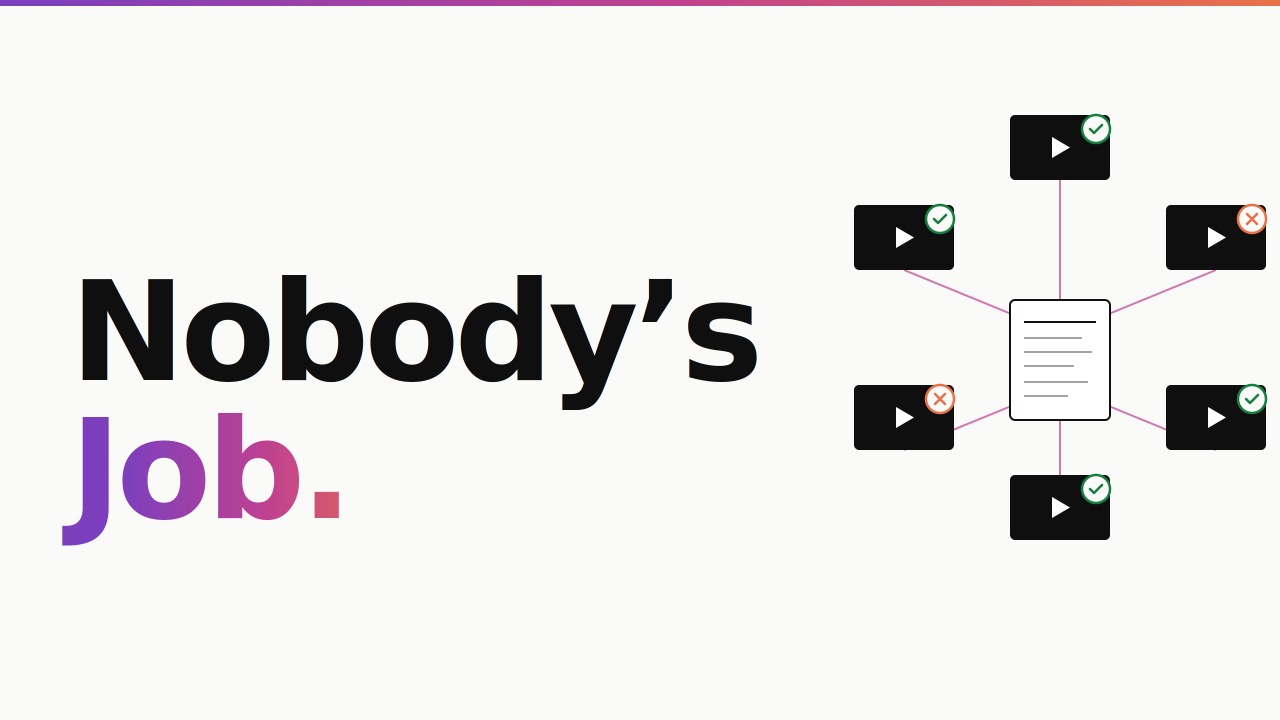
After the videos come back, Brief Analyzer reads the brief, extracts every rule across visual, audio, messaging, brand safety, and legal categories, and checks each video against all of them. The output is a timestamped report detailing what was followed and what was missed. You’re not watching 40 videos hoping you catch everything; you’re reading a report that caught everything for you.
The payoff isn’t just that you saved time. It’s that you know what you approved. That’s a different kind of confidence than crossing your fingers and moving on.
Let’s Connect
We built Brief Analyzer because someone described their reality to us honestly and we recognized it immediately. Running blind, overwhelmed, and making approvals without enough information to make them well shouldn’t be how it works.
If you’re managing influencer campaigns or scaling AI-generated video content and this sounds familiar, I’d like to show you what Brief Analyzer finds on your actual content. We’ll run your brief and a few of your videos and walk you through the results.
- Product Tour: See how it works
- Direct Contact: LetsVibe@vibeanalytics.com